


Opinion · 24 July 2026
Architecture in context: climate, city and material
Why a project’s expression begins with a careful reading of its setting.
Author: Evgeniy Tsoi
The site sets the rules
Context is a set of verifiable conditions: terrain, orientation, surrounding buildings, access points, pedestrian connections, climate and legal constraints. Without gathering these before the first sketch, a striking form soon conflicts with the layout, operation or urban environment.
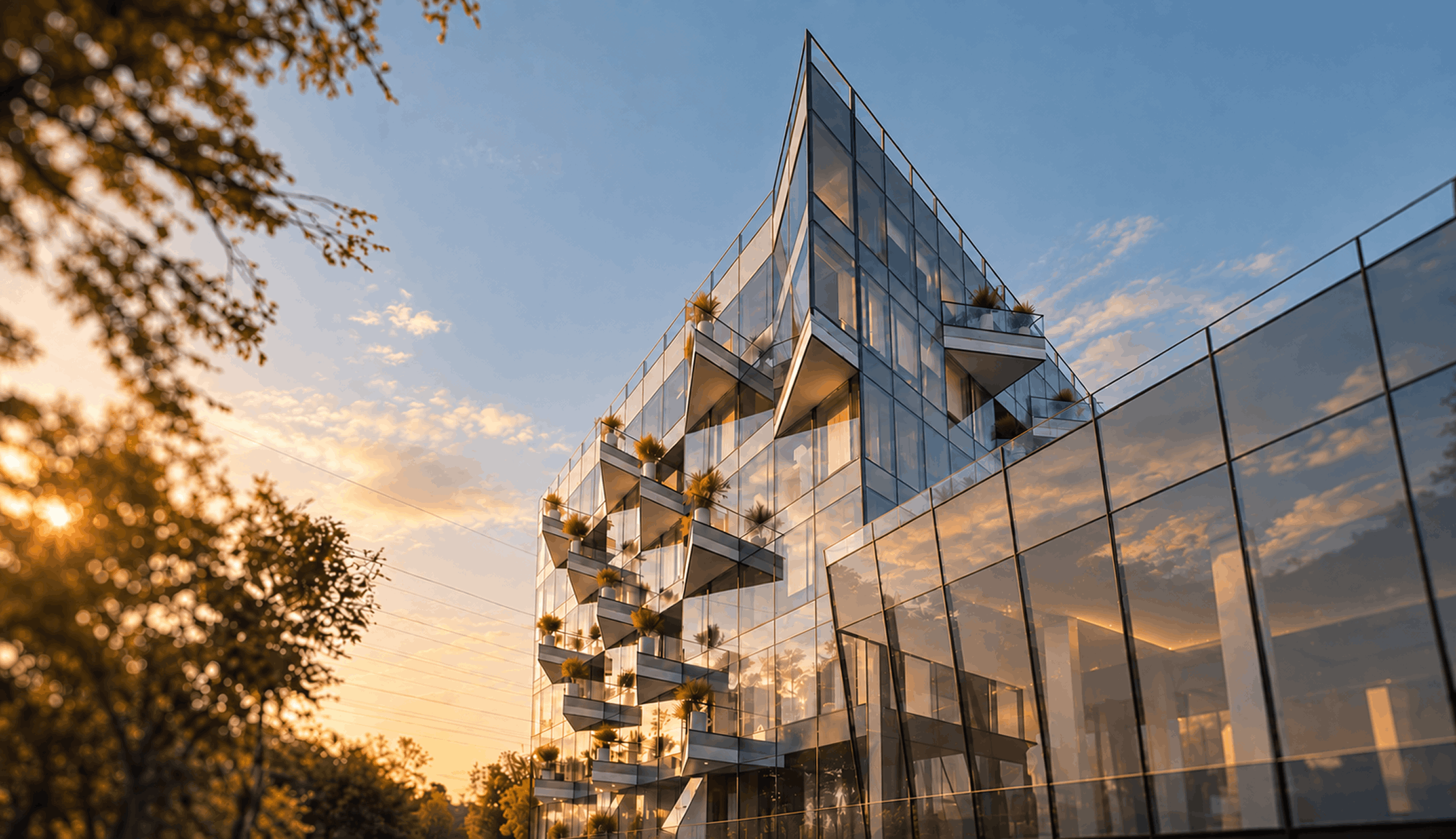
In Almaty, terrain, strong sunlight, seasonal changes and mountain views are especially important. At concept stage, this means considering the building’s position, façade depth, shade and the connection between inside and outside. A generic façade cannot replace a precise response to the setting.
Connections first, silhouette second
A building takes part in city life through more than its façade. The position of the entrance, the pedestrian approach, ground-floor activity and the permeability of the site matter. These decisions shape daily use more strongly than a dramatic visualisation.
Site analysis must therefore come before composition. The architect examines access, neighbouring uses, views, sunlight and circulation. Only then can form and materials be chosen to support the building’s logic.
Material works with climate
Choosing finishes starts with durability, maintenance, the behaviour of surfaces under strong light and their relationship to structure. Deep openings, canopies and transitional spaces can shape the façade’s character while making the building more comfortable to use.
Context filters out arbitrary decisions. In a strong project, climate, routes, form and material come together as a single system. Architecture rooted in its setting finds its expression through this coherence.
Good architecture reveals a place’s potential.